GraniteHaven Pest Solutions logoGraniteHaven Pest Solutions
Fast, upfront pest control sevice in Cincinnati, OH, a clear quote in minutes

Pest Control Service Cincinnati

Securing professional pest control service in Cincinnati requires an objective, clinical protocol that targets active infestations at primary nesting harborage zones rather than dispersing broad cosmetic sprays. GraniteHaven Pest Solutions approaches pest incursions as urgent structural defense events, restoring baseline domestic hygiene for properties built along the Ohio River basin and across diverse urban glacial topographies.

Get your pest control sevice quote, Cincinnati

We only use your ZIP to check availability, no spam.

Subterranean Termite TreatmentBed Bug Heat and Precision RemediationResidential Rodent Exclusion and Removal
Pest Control Sevice in Cincinnati, OH
Pest Control Sevicein Cincinnati, OH

What is Pest Control Sevice in Cincinnati, OH?

Pest control service in Cincinnati is an environmental health and structural defense intervention designed to identify, eradicate, and mechanically exclude biological vectors from residential and commercial structures across Hamilton County.

Why homeowners choose GraniteHaven Pest Solutions

  • ✓Cincinnati pest control service pricing begins at an on-site diagnostic minimum fee of $200, with comprehensive remediation projects typically landing between $275 and $850 based on square footage, nesting density, and biology.
  • ✓Targeted eradication utilizes low-toxicity Integrated Pest Management protocols registered with the <a href="https://www.epa.gov/safepestcontrol">US Environmental Protection Agency</a>, prioritizing non-volatile gel baits and microencapsulated suspensions safe for domestic pets once dry.
  • ✓Physical exclusion stops recurring ingress by sealing utility penetrations, roofline fascia gaps, and historic limestone mortar voids using corrosion-resistant copper mesh and architectural elastomeric sealants.
  • ✓Seasonal pest pressures in Hamilton County produce winged subterranean termite swarms from March through May, severe stinging insect colony growth from June through August, and rodent migrations into basements from September through November.
Subterranean Termite Treatment
Bed Bug Heat and Precision Remediation
Residential Rodent Exclusion and Removal
Our Expertise

Our team services we provide

Every service reflects the same meticulous attention to detail, whether it's a single job or a larger pest control sevice project across Cincinnati.
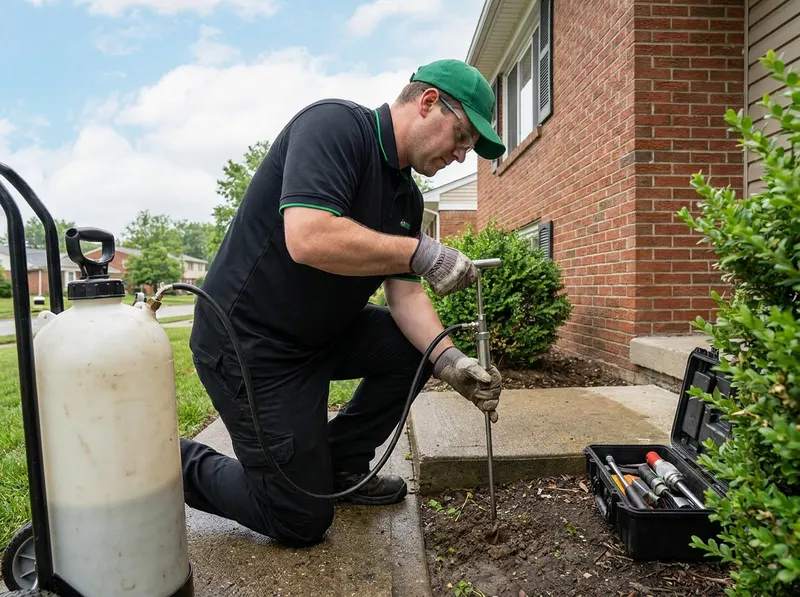
Subterranean Termite Treatment in Cincinnati, OH

Subterranean Termite Treatment

Subterranean termite defense in Cincinnati requires establishing uninterrupted liquid termiticide barriers along foundation footings or deploying specialized bait matrix stations to intercept subterranean worker castes. Liquid applications create continuous non-repellent chemical boundaries using fipronil or imidacloprid that transfer through social grooming, neutralizing entire underground colonies nesting in moist clay subsoils. Structural framing, sills, and floor joists undergo direct localized injections where active feeding galleries appear. Regular moisture reduction, downspout redirections, and wood-to-ground clearance adjustments complement every termiticide application to permanently eliminate conducive subterranean conditions in accordance with guidelines from the National Pesticide Information Center . Trenching along perimeter foundation stem walls reaches six inches below grade to saturate porous backfill soils thoroughly.

Get a quote →
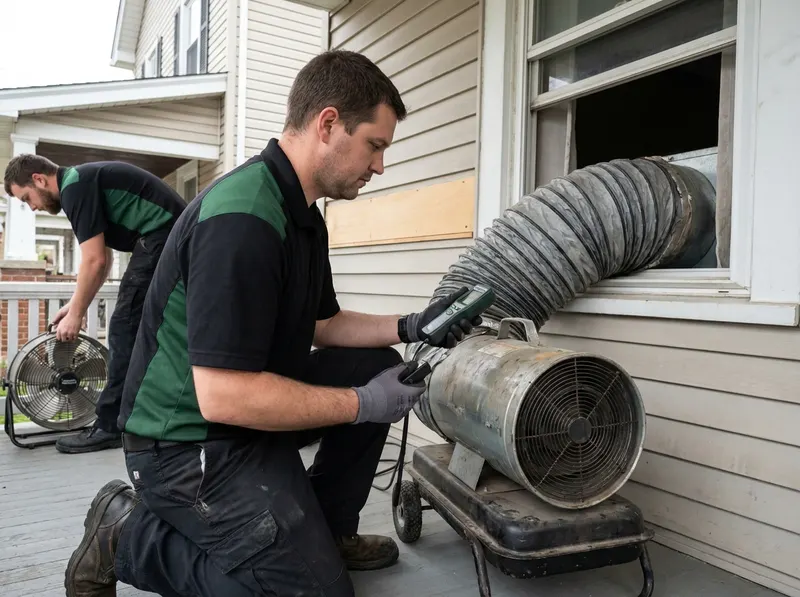
Bed Bug Heat and Precision Remediation in Cincinnati, OH

Bed Bug Heat and Precision Remediation

Bed bug extermination combines targeted thermal remediation with residual insect growth regulators to address egg clusters, nymphs, and adult stages hiding within baseboards, mattresses, and interior partition walls. Targeted application methods penetrate deep structural voids without relying on consumer aerosol sprays that scatter insects across adjoining rooms. Technicians execute methodical mattress, frame, electrical outlet, and perimeter carpet tack strip treatments using EPA-registered compounds engineered specifically for indoor sleeping quarters. Complete eradication restores sleep continuity and domestic hygiene without damaging sensitive structural furnishings. Follow-up visual inspections and active interceptor monitors verify complete egg mortality over a mandatory three-week developmental window consistent with pest management standards published by the National Pest Management Association .

Get a quote →
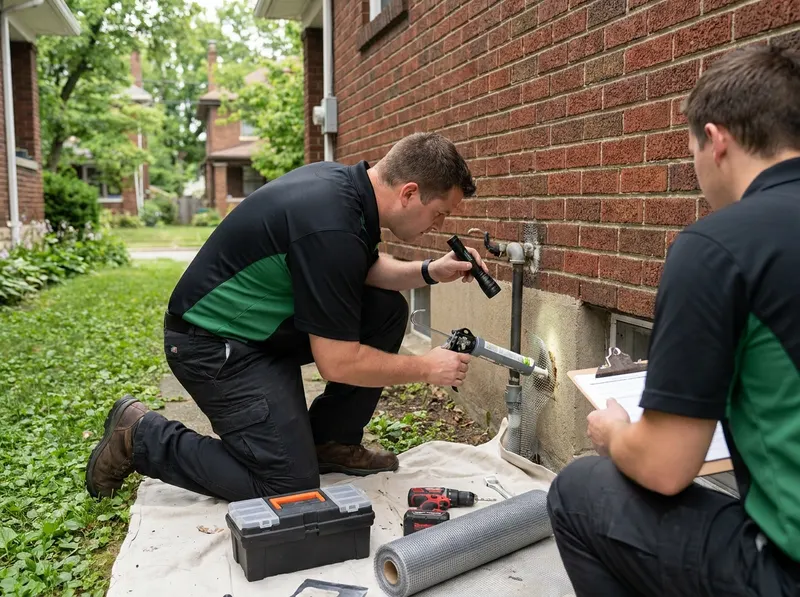
Residential Rodent Exclusion and Removal in Cincinnati, OH

Residential Rodent Exclusion and Removal

Effective rodent defense eliminates indoor populations of Norway rats and house mice while sealing exterior architecture against future structural ingress. Technicians conduct complete envelope assessments to identify utility pipe penetrations, missing crawlspace vent screens, and foundation mortar gaps larger than 6 millimeters. Interior populations are removed using mechanical capture arrays placed strictly out of reach of domestic pets and children, eliminating secondary poisoning hazards associated with indoor rodenticides. Exterior entry points are mechanically sealed using heavy-gauge copper mesh, elastomeric sealants, and galvanized steel hardware cloth conforming to building preservation standards outlined by the National Park Service Preservation Briefs . Attic crawlspaces and insulation cavities receive biological sanitization to neutralize scent trails and pheromones that attract wandering colonies.

Get a quote →
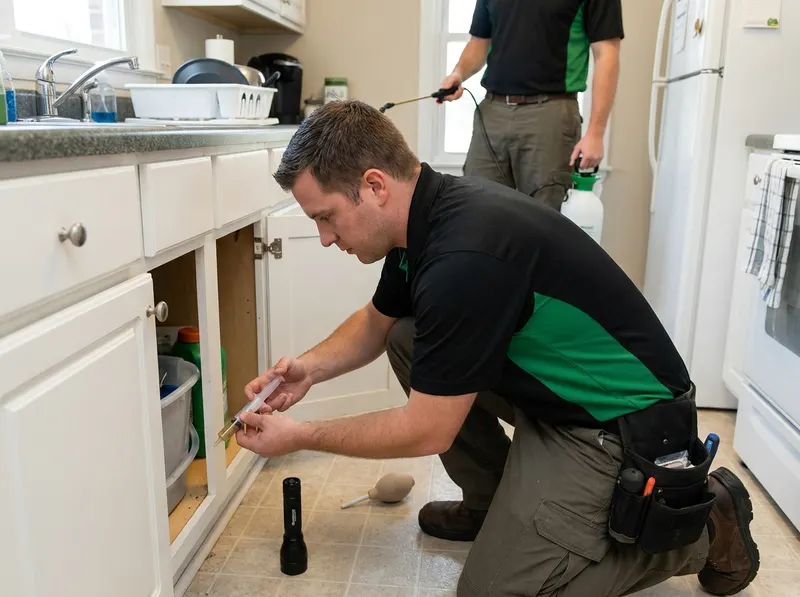
German Cockroach Cleanout Protocol in Cincinnati, OH

German Cockroach Cleanout Protocol

German cockroach cleanouts eliminate severe kitchen and bathroom aggregations using targeted bait placements containing secondary mortality agents and precision insect growth regulators. Non-repellent baits are strategically injected into cabinetry hinge recesses, appliance motor housings, hollow kitchen island footings, and utility pipe collars where roaches nest near warmth and moisture. This protocol interrupts reproductive molting cycles and eliminates the egg-bearing female population without aerosolizing chemical actives into indoor airspaces. Comprehensive sanitation guidance, structural crack caulking, and plumbing condensation remediation recommendations ensure long-term domestic hygiene across multi-unit and single-family structures. Routine inspections evaluate juvenile-to-adult ratios to verify the systematic collapse of the indoor reproductive colony.

Get a quote →
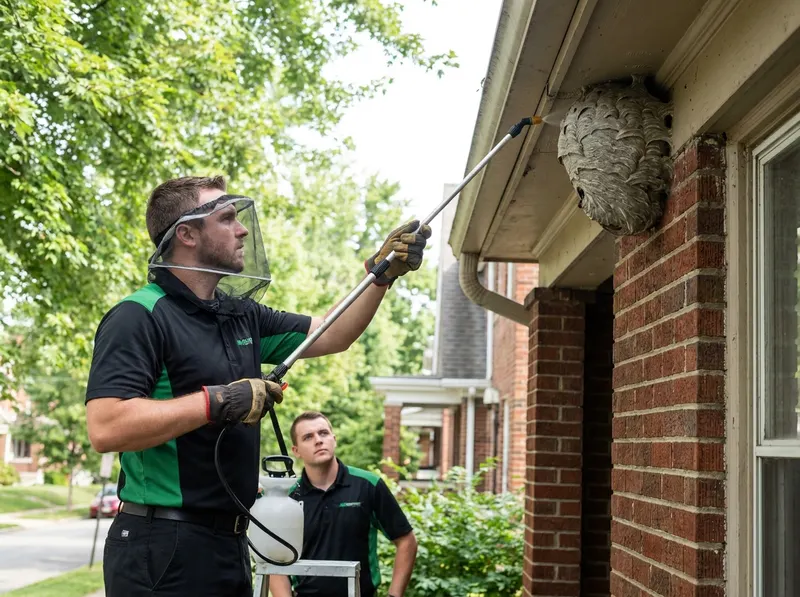
Stinging Insect and Wasp Nest Removal in Cincinnati, OH

Stinging Insect and Wasp Nest Removal

Stinging insect remediation safely neutralizes paper wasp, hornet, and yellowjacket colonies nesting along residential eaves, soffits, chimney crowns, and exterior landscape features. Technicians apply pressurized directional knockdown formulations directly into nest entry points, neutralizing aggressive defensive swarms within minutes. Nests are mechanically detached and the anchoring surface is treated with residual repellents to prevent re-establishment during the mid-summer breeding surge. Ground-nesting yellowjacket burrows receive deep root-zone applications to eliminate underground comb structures completely. Technicians utilize full protective bee suits and specialized telescoping delivery lances to execute removals safely without risk to adjacent family living zones or domestic pets, following structural arthropod control standards from Entomological Society of America .

Get a quote →
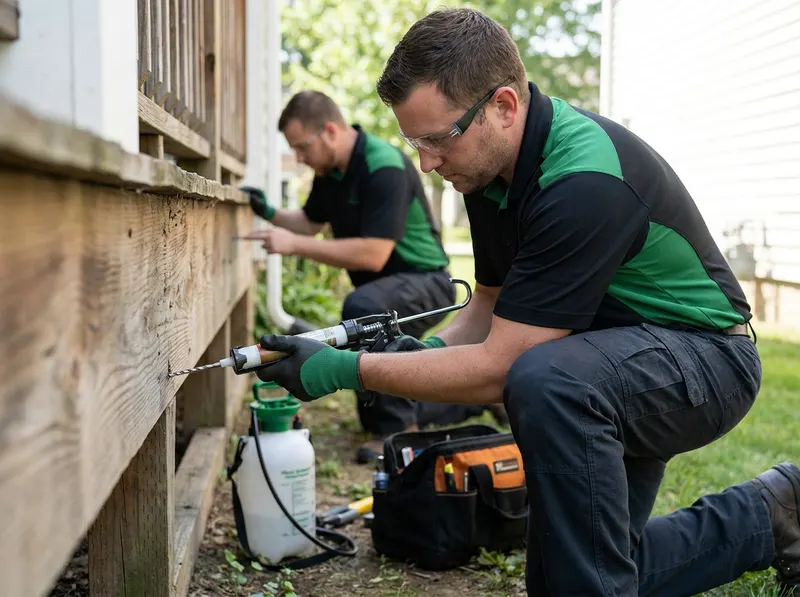
Carpenter Ant Structural Remediation in Cincinnati, OH

Carpenter Ant Structural Remediation

Carpenter ant management targets satellite nests excavating structural lumber, window frames, damp door headers, and moisture-compromised deck sills. Liquid non-repellent transfer agents are paired with carbohydrate and protein bait matrixes, allowing foraging workers to carry lethal actives directly into the parent nest hidden outside in dead trees or landscape ties. Technicians locate interior nesting pockets using acoustic detection and moisture meters to pinpoint active galleries hidden behind drywall. Structural moisture corrections, plumbing leak repairs, and tree canopy trimming are specified to remove external access pathways and structural dampness. Void dusting with desiccating inorganic dusts ensures long-term protection inside moisture-prone wall cavities.

Get a quote →
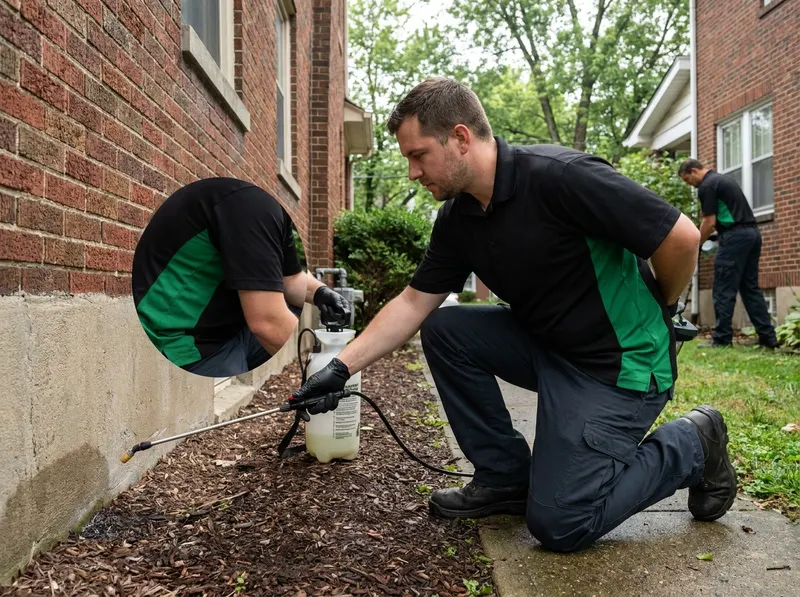
Crawling Insect Perimeter Defense in Cincinnati, OH

Crawling Insect Perimeter Defense

Perimeter defense establishes a durable exterior micro-barrier against crawling ground arthropods, including centipedes, earwigs, crickets, ground beetles, and spiders attempting autumn indoor migration. High-adhesion microencapsulated suspensions are applied to exterior foundation walls, window wells, door thresholds, and adjacent soil borders up to a height of three feet and out two feet. This barrier neutralizes pests upon contact before they penetrate basement windows, crawlspace doors, or ground-level exterior door sweeps. Regular seasonal renewals maintain chemical integrity through extended rain patterns, intense ultraviolet radiation, and severe temperature fluctuations typical of the Midwestern climate.

Get a quote →

Commercial Kitchen Integrated Pest Management

Commercial IPM programs deliver rigorous regulatory compliance and health-inspection defense for culinary, food processing, distribution, and hospitality facilities. Service protocols center on mechanical monitoring traps, crack-and-crevice baiting, drain biocatalytic foam treatments, and strict structural exclusion along delivery docks and floor sinks. Detailed digital reporting logs species encounters, corrective actions, and targeted material applications to satisfy municipal health department mandates and sanitation regulations enforced by the US Food and Drug Administration . Discrete scheduled applications occur outside regular operating hours to preserve commercial hygiene standards, avoid food contact surface exposure, and safeguard customer dining areas.

Get a quote →
The essentials

What Cincinnati customers should know

  • Cincinnati pest control service pricing begins at an on-site diagnostic minimum fee of $200, with comprehensive remediation projects typically landing between $275 and $850 based on square footage, nesting density, and biology.
  • Targeted eradication utilizes low-toxicity Integrated Pest Management protocols registered with the <a href="https://www.epa.gov/safepestcontrol">US Environmental Protection Agency</a>, prioritizing non-volatile gel baits and microencapsulated suspensions safe for domestic pets once dry.
  • Physical exclusion stops recurring ingress by sealing utility penetrations, roofline fascia gaps, and historic limestone mortar voids using corrosion-resistant copper mesh and architectural elastomeric sealants.
  • Seasonal pest pressures in Hamilton County produce winged subterranean termite swarms from March through May, severe stinging insect colony growth from June through August, and rodent migrations into basements from September through November.
  • GraniteHaven Pest Solutions provides single-event curative treatments alongside optional quarterly maintenance defense, avoiding mandatory multi-year subscription contracts.
The GraniteHaven Pest Solutions standard

Why Cincinnati keeps calling us back

01

A clear, written price

You get a firm, itemized quote for your pest control sevice before any work begins, no surprises, no pressure.

02

Your property, protected

Careful prep, tidy work, and a full cleanup when we are done. We treat your home and belongings like our own.

03

One crew, start to finish

The same trusted, background-checked team from the first call to the final check.

Buyer's guide

Choosing the right pest control sevice pro

Selecting appropriate structural defense protocols requires matching specific pest biology to the physical architecture of the property. For active biological vectors within living areas, such as German cockroaches or bed bugs, targeted chemical disruption and mechanical extraction must be deployed immediately to halt rapid reproductive cycles. For seasonal subterranean invaders such as subterranean termites, perimeter soil barriers or subterranean monitoring stations provide long-term subterranean defense.

When deciding between targeted single-event remediation and multi-season perimeter maintenance, property owners must weigh immediate out-of-pocket costs against continuous structural defense: single treatments resolve isolated infestations for specific nesting events, whereas scheduled perimeter barrier renewals defend against recurring seasonal pressure from outdoor colonies. Historic structures in older river valley neighborhoods benefit heavily from physical mortar and perimeter exclusion, whereas modern suburban slab foundations require deeper sub-slab injection and utility conduit sealing. Choosing liquid soil treatments yields immediate chemical mortality zones around foundations, whereas installing slow-acting bait matrices eliminates the subterranean queen over a 60 to 90-day window without disturbing landscape plantings.

If a homeowner discovers wood-boring powder post beetles or subterranean termites compromising weight-bearing sill plates, liquid barrier injection with non-repellent transfer chemistry offers rapid containment; if exterior landscape beds host sprawling carpenter ant colonies trailing toward second-story rooflines, dual-action granular and bait formulations deployed along structural perimeter grade points stop foraging before wood tunneling begins. The operational trade-off centers on disruption and timeframe: liquid trenching requires immediate physical access to exterior perimeter foundation soil, whereas discrete exterior bait stations demand zero soil disturbance but require progressive colony consumption over multiple weekly cycles.

Investment

Pest Control Sevice cost and what drives it

Every project gets a firm, written price after an on-site visit. Ranges below for orientation.

Initial Diagnostic Inspection & Targeted Treatment Minimum$200 - $350
Single-Event German Cockroach Cleanout Remediation$275 - $550
Bed Bug Elimination Protocol (Per Targeted Room)$350 - $750
Complete Rodent Trapping & Physical Entry Point Exclusion$325 - $850
Stinging Insect Nest Neutralization & Removal$200 - $375
Subterranean Termite Liquid Soil Barrier Installation$950 - $2,800
Subterranean Termite Bait Matrix System Installation$1,200 - $2,400
Seasonal Perimeter Pest Defense Application$200 - $325
Carpenter Ant Interior Void & Perimeter Treatment$280 - $600
Flea and Tick Exterior Habitat Suppression$225 - $450
Commercial Kitchen Integrated Pest Management (Monthly)$200, $450
Attic or Crawlspace Rodent Sanitization & Waste Removal$450 - $1,200
No-pressure estimate

Get it done right

Tell us about your pest control sevice job and we'll send a clear, written quote, usually the same day. Or just call and talk to a real Cincinnati pro.

(513) 812-8076

Get your pest control sevice quote, Cincinnati

We only use your ZIP to check availability, no spam.

Where we work

Areas we serve near Cincinnati

GraniteHaven Pest Solutions pest control sevice team in Cincinnati, OH

Cincinnati's distinctive topography, marked by steep river bluffs, rolling glacial terraces, and dense, moisture-retaining clay subsoils, concentrates severe subterranean termite pressure along hillside foundations from Mount Adams and Mount Lookout down toward Columbia Parkway. In historic urban districts like Over-the-Rhine, Clifton, and Northside, 19th-century brick brownstones and multi-family structures frequently share continuous party walls, stone-rubble masonry foundations, and aging underground utility corridors. These subterranean corridors allow house mice, Norway rats, and German cockroaches to travel freely between interconnected properties without ever moving across surface outdoor pathways. In suburban residential pockets throughout Hyde Park, Oakley, and College Hill, mature tree canopies overhang rooflines and deposit heavy moisture along eaves, creating optimal damp conditions for carpenter ant satellite nests and yellowjacket burrowing. Properties situated within the Mill Creek watershed and near the Little Miami River experience extended high relative humidity that slows soil drainage, driving crawling ground arthropods toward basement walkouts and cracked concrete slabs during sudden summer rain storms. GraniteHaven Pest Solutions customizes every structural defense plan to these regional construction typologies, matching specialized low-toxicity compounds, borate wood treatments, and mechanical copper-mesh barriers to historic limestone foundations, fieldstone walls, and modern suburban framing across all of Hamilton County.

Hyde ParkOver-the-RhineMount LookoutCliftonOakleyNorthsideMount AdamsCollege HillPleasant Ridge
Questions

Common questions

What is the average cost of pest control service in Cincinnati?
Professional pest control service in Cincinnati begins at a baseline diagnostic and targeted remediation fee between $200 and $350 for isolated insect encounters. Comprehensive remediation procedures, including multi-room bed bug elimination or full structural rodent exclusion, average between $325 and $850 based on square footage and nesting density. Subterranean termite liquid trenching or perimeter bait station arrays typically range from $950 to $2,800 depending on linear foundation footage. GraniteHaven Pest Solutions assesses every property on-site and provides confirmed upfront pricing before any application begins.
Are pest control products safe for indoor domestic pets and children in Cincinnati homes?
GraniteHaven Pest Solutions utilizes precision application methods adhering strictly to regulatory standards from the Ohio Department of Agriculture. Technicians apply low-toxicity microencapsulated suspensions and non-volatile gel baits placed deep into inaccessible wall voids, structural cracks, or tamper-resistant bait stations. These placements ensure treatments remain out of reach of curious dogs, indoor cats, and toddlers. Liquid perimeter applications dry completely within two to three hours, rendering the active compounds inert, non-staining, and odor-free for safe indoor re-entry.
How does pest control service in Cincinnati eliminate mice from historic stone basements?
Eliminating rodent populations from historic Cincinnati fieldstone and limestone foundations requires a dual protocol of interior mechanical capture and exterior physical exclusion. Technicians thoroughly inspect foundation perimeters to seal gaps around sill plates, cellar doors, and utility lines using rust-proof copper mesh, galvanized hardware cloth, and architectural elastomeric sealants. Mechanical traps placed along interior foundation ledges quickly remove resident rodents without utilizing interior poison baits that could cause pests to expire and decompose within inaccessible wall cavities.
How frequently should a Cincinnati residence receive perimeter pest control treatments?
Perimeter pest control treatments in Cincinnati remain active on exterior foundation walls and soil lines for approximately 90 days before outdoor ultraviolet light, rain, and soil microbial activity break down the residual barrier. Homeowners seeking continuous structural defense benefit from quarterly applications scheduled across early spring, mid-summer, autumn, and early winter. For isolated pest incursions, single-event curative treatments resolve active biological nests without obligating the client to ongoing recurring subscription contracts.
What specific conditions trigger heavy termite swarms across Cincinnati properties?
Subterranean termite swarms in Cincinnati occur between late March and late May when outdoor soil temperatures rise above 60 degrees Fahrenheit immediately following soaking spring rainstorms. Eastern subterranean termites emerge from colonies buried in moist clay subsoils, taking short flights to pair off and initiate new colonies. Visible signs include piles of discarded translucent insect wings on interior window sills, emergence pinholes in baseboards, and vertical dirt shelter tubes built along basement foundation walls.
What steps should be taken prior to a professional bed bug treatment in Cincinnati?
Preparing a property for bed bug remediation involves stripping all bed linens, blankets, and mattress encasements, followed by laundering them at water temperatures exceeding 120 degrees Fahrenheit and drying on high heat for 30 minutes. Personal items, clothing, and clutter resting on bedroom floors must be picked up and bagged in sealed plastic containers to expose baseboards and carpet perimeters. Furniture should be pulled roughly two feet away from interior walls, allowing technicians full access to structural joints, outlet covers, and perimeter baseboards during precision product placement.
Why do over-the-counter pest control sprays frequently fail against German cockroaches in Cincinnati?
Consumer aerosol sprays typically rely on fast-acting pyrethroids that act as repellents, causing active German cockroach populations to scatter deeper into inaccessible wall voids, electrical appliances, and plumbing chases. This phenomenon, known as budding, multiplies the number of nesting sites and accelerates female egg production. Professional Integrated Pest Management uses non-repellent transfer chemistry and ingestible insect growth regulators that foraging roaches unknowingly carry back into the central aggregation, ensuring complete colony mortality within two to three weeks.
How can Cincinnati homeowners distinguish between swarming termites and flying ants?
Termites and flying carpenter ants can be distinguished by observing their waistline, antenna shape, and wing proportions. Termites possess a broad, uniform waist, straight beaded antennae, and four wings of identical size and shape that are roughly twice the length of their body. In contrast, winged carpenter ants feature a distinctly pinched waist, elbowed antennae, and larger front wings paired with noticeably smaller hind wings. Termite wings are also extremely fragile and shed quickly, leaving small piles of translucent wings across window sills.
What exterior attractants cause stinging insect nests to proliferate near Cincinnati homes?
Stinging insects such as paper wasps, bald-faced hornets, and yellowjackets proliferate near Cincinnati residential properties due to open trash bins, sweet fruit trees, exterior wood decks, and abundant outdoor water sources. Exposed architectural overhangs, soffit corners, and unsealed siding gaps provide sheltered nesting platforms protected from prevailing wind and rain. In late summer, worker wasps shift from gathering protein for larvae to seeking sugary food sources, leading to heightened defensive behavior around outdoor patios, dining areas, and play structures.
How does pest control service in Cincinnati prevent carpenter ants from damaging structural wood?
Protecting homes from carpenter ants involves identifying and correcting moisture leaks that soften structural framing, followed by targeted baiting and non-repellent barrier applications. Unlike termites, carpenter ants do not consume cellulose; they hollow out damp wood to carve smooth nesting galleries for egg rearing. Technicians inject non-repellent liquid actives and undetectable bait matrices into infested wall voids and perimeter entry points, allowing foraging workers to transfer the active toxicant throughout satellite and parent colonies without triggering repellent avoidance.
Are commercial pest control protocols in Cincinnati compliant with local health department regulations?
Commercial pest control protocols deployed by GraniteHaven Pest Solutions adhere strictly to local standards established by the Cincinnati Health Department and federal sanitation guidelines. Technicians utilize non-toxic mechanical monitors, drain bio-enzyme foaming, and targeted non-volatile bait placements within commercial culinary spaces to eliminate fly, cockroach, and rodent pressures. Each visit produces digital service logs documenting target pests, active materials used, and structural sanitation recommendations to keep food establishments fully compliant during unannounced health inspections.
What physical entry points do mice use to enter Cincinnati homes during the autumn months?
Mice exploit exterior structural openings as small as 6 millimeters, roughly the diameter of a standard pencil, to enter homes during autumn cooling periods. Common Cincinnati residential entry points include gaps beneath vinyl or garage door weatherstripping, unsealed penetrations around air conditioner refrigerant lines, deteriorated crawlspace cast iron vent grates, and open weep holes in brick facades. Sealing these entry points with durable copper mesh and industrial elastomeric caulking prevents recurring rodent incursions far more effectively than repetitive interior baiting alone.

Get started today

Estimates for Cincinnati & the surrounding area.

PEST CONTROL SEVICE guides

How much does professional pest control service cost in Cincinnati?, Complete Guide →Can I get same-day pest control service in Cincinnati?, Complete Guide →What is the average cost of termite treatment in Cincinnati?, Complete Guide →Preventive Pest Control Treatments →